
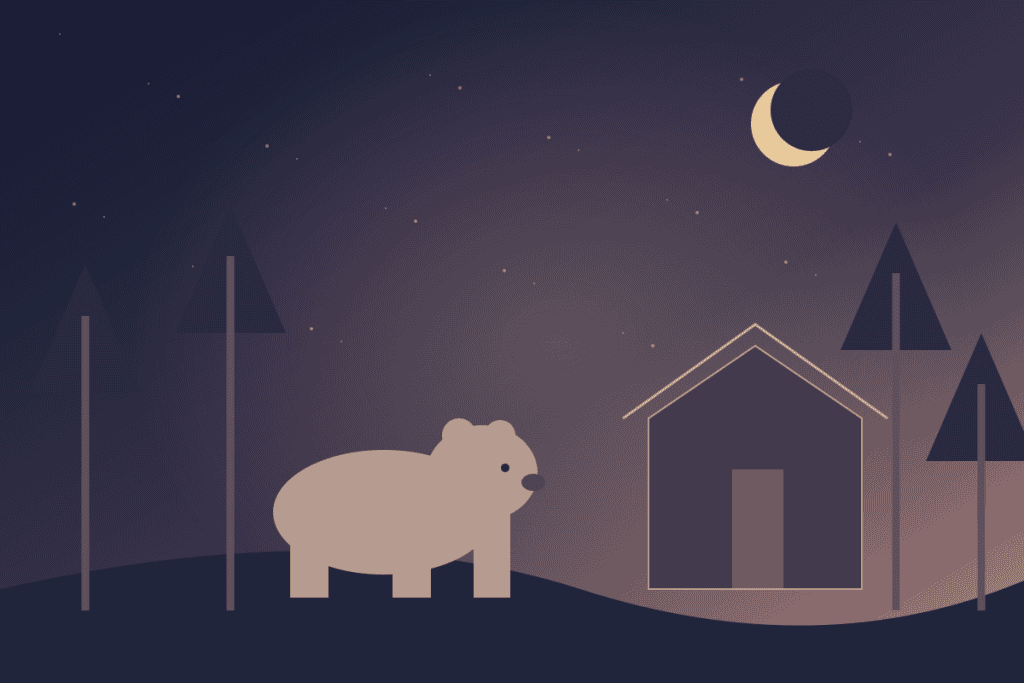
A bear dream can bring fear, admiration, affection or the wish for distance. Size may suggest strength, but a large presence is not automatically threatening. Behaviour, available space and your response make the scene more specific than the animal alone.
Memories can appear in dreams (1). A documentary, toy or illustration may have supplied the bear. Consider those references before searching for an authority figure behind it.
Distance comes first
Is the bear on a hillside, behind glass, beside you or inside a home? A distant presence can be comfortable while unwanted closeness becomes unsettling. The change in distance may organise the whole dream.
Notice whether you approach. Curiosity, wanting to help or needing to pass are different intentions. Do not turn an anticipated threat into an observed attack when summarising the story.
Calm, asleep or indifferent
A quiet bear might suggest steadiness. A sleeping one may bring up rest, waiting or not wanting to disturb. It might also be part of the background. There does not have to be a concealed emotional message.
Indifference is worth keeping: you may be worried while the animal ignores you. Separate what it did from what you feared. This prevents the interpretation from becoming more alarming than the scene itself.
A chase or attack
Pursuit puts finding an exit at the centre. Where do you go, who accompanies you and what blocks the way? Those actions may matter more than the species. The dream cannot identify an actual enemy.
If you wake before contact, the outcome remains unknown. Do not finish it by deciding the bear would certainly catch you. An analogy with present pressure is possible, but name a concrete situation rather than measuring a problem by the bear’s size.
A cub, several bears or a protective presence
A cub may shift attention towards care. Do you look for it, carry it or give it room? These actions do not establish a wish for parenthood or a duty to protect someone.
Several bears may be a peaceful group or feel overwhelming. Describe their arrangement and movement rather than multiplying an omen by the number of animals. If one protects you, ask what becomes possible: resting, walking past or staying somewhere.
Imagine a hypothetical dream in which a bear quietly walks on the other side of a garden fence. You want to watch while keeping the boundary. The question may concern a comfortable distance, not defeating a threat. It is a reflection on a dream, not wildlife-safety guidance.
Brown, black, white or a teddy bear
Colour might recall a known species or character. It does not automatically assign danger, luck or purity. Start with your own association before consulting a list.
A teddy bear may connect with a room, person or period rather than wildlife. If it becomes alive, the change from familiar object to independent presence may be the central event. Keep that transition in your account.
Shelter and the end of the encounter
A door opening, someone welcoming you or the bear leaving can change the ending. You may find a workable distance rather than defeat the animal. Relief and companionship should not disappear behind the initial fear.
For a presence entering a home, compare burglary dreams without equating an animal with a thief. For another animal intruding, rat dreams explores space and reaction. These guides do not tell you how to behave around a real wild animal.
Does the bear represent my hidden anger?
It might be your association, but the animal does not require that conclusion. Strength could remind you of rest, reassurance or a need for distance. You may also find no personal connection.
What about a spiritual protector?
You can retain a personal sense of protection without claiming an external guarantee. If the encounter seems predictive, precognitive dreams helps distinguish that conviction from what can be checked. The dream cannot reliably forecast an attack or difficult meeting.
Sources
(1) Vallat et al. (2017), Characteristics of the memory sources of dreamshttps://journals.plos.org/plosone/article?id=10.1371/journal.pone.0185262
Personal symbolic readings; the cited studies do not validate universal meanings.
Further reading
 Dreaming of mice: hiding, many mice, catching and caring for one
 Dreaming of rats: bites, infestations, dead rats and pets
 18:18 Meaning: Love, Spirituality and Angel Number 1818
 17:17 Meaning: Love, Twin Flame and Angel Number
 Dreaming of spiders: bites, webs, giant spiders and what to notice
 Flood dream meaning: rising water, flooded homes and finding safety
 11:00 meaning: give an intention a clear direction
 13:13 meaning: revise what matters without erasing it